


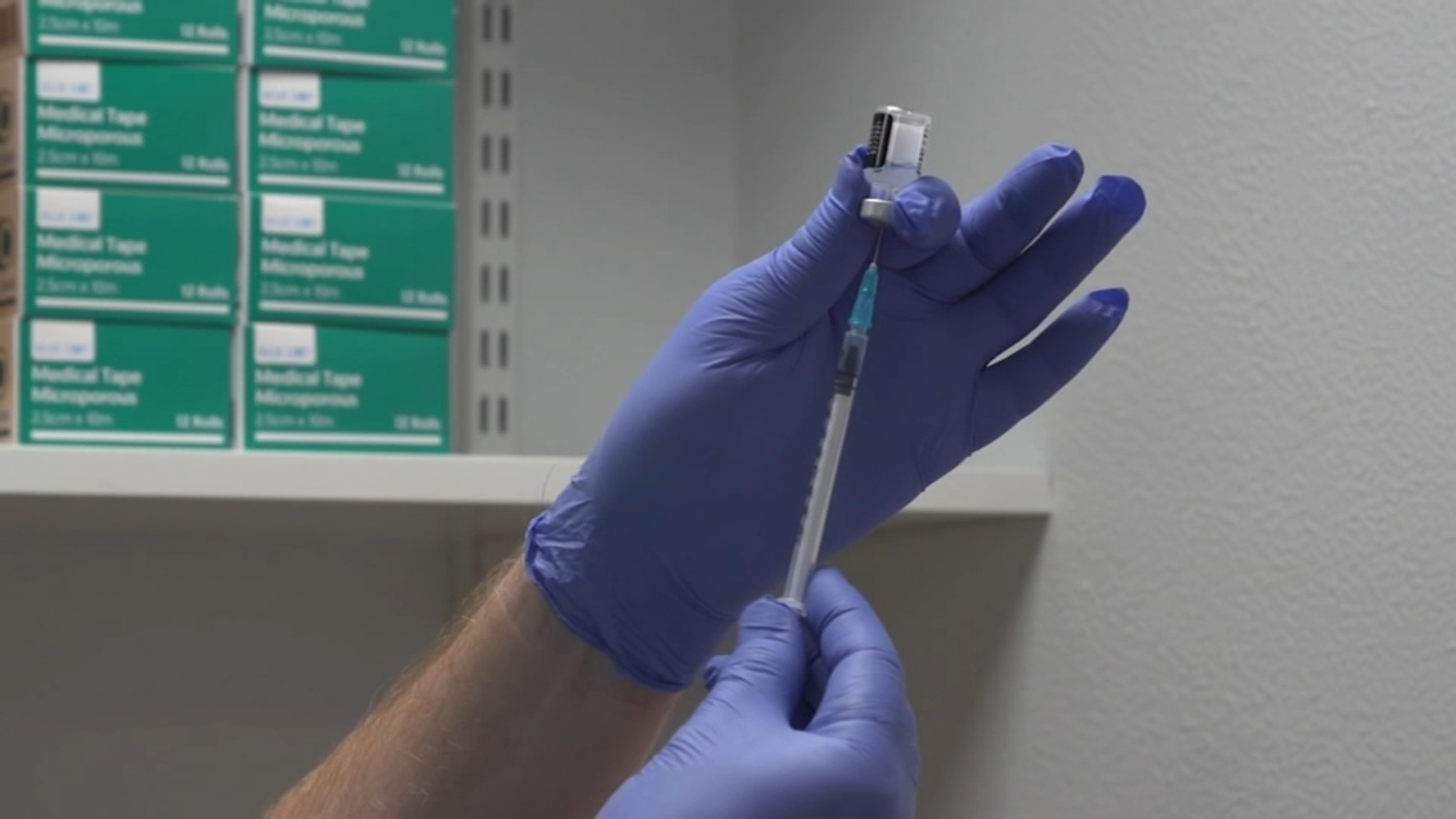
The Advisory Committee on Immunization Practices voted to remove the universal recommendation for the hepatitis B vaccine at birth.
“I, alongside many of my colleagues, have a reaction that is mixed between frustration, fear for children and vulnerable populations and confusion about where this decision really came from or what science, if any, was actually laid forward for the committee to even vote in this direction,” said Dr. Alok Patel, and ABC News Medical Contributor and pediatrician at Stanford Children’s Health.
According to these new recommendations:
- If a mother tests negative for hepatitis B, parents should decide, with the guidance of their doctor, whether the shot is right for their newborn.
- If a mother tests positive for hepatitis B or has an unknown status, parents should continue to get their newborn vaccinated.
For decades, the practice has been the hepatitis B vaccine be given at birth and the 3-dose series be completed by 18 months.
“Since 1991, when we first developed the recommendation that all infants should get the hepatitis B vaccine cases in this country have dropped by around 95%,” said Patel.
“Do you give a vaccine to an infant when you do not know for sure that the benefits would outweigh the harms? And of course the answer is no. And I think this is why our peer nations have not chosen to do this for non-high risk infants at this age,” said Dr. Tracy Beth Heg, Acting Director at the Center for Drug Evaluation and Research, during Friday’s meeting.
The vote does state that newborns who do not receive the hepatitis B birth dose get an initial dose no earlier than 2 months old. Supporters of the new recommendation say it is centered around informed consent.
“This language includes individual decision-making, that will enable full access to these vaccines for the parents who choose that for their children,” said Dr. Catherine Stein, a member of ACIP.
“I think this is a very positive move, one that brings us in line with peer nations to not recommend giving the hepatitis b vaccine routinely at birth,” said Heg.
Dr. Emmanuel Thomas, Professor of Pathology at the University of Miami School of Medicine who serves as Board Chair of the American Liver Foundation, believes the recommendations will have a domino effect.
“Once the vaccine isn’t recommended universally there will be less support from several areas in the United States for both paying for the vaccine, paying for administration of the vaccine, and paying health workers to give the vaccine. In essence, there’s going to be a big decrease in support for doing the work that it takes to vaccinate babies for hepatitis B with aligned policy there was a strong effort to achieve universal vaccination,” said Thomas.
“I am a little concerned that if we start seeing a swift decrease in the number of hepatitis B vaccine doses given that the manufacturers might be incentivized not to manufacture it anymore,” noted Chari Cohen, president of the Hepatitis B Foundation.
In a separate 6-4 vote, ACIP recommended parents of older children should talk to their doctor about hepatitis B antibody testing before considering subsequent hepatitis B vaccination.
“You will not get long-term immunity from a single dose. Likely one dose might protect you for a short period of time, but unless you receive the entire series of doses, you would become most likely vulnerable to getting hepatitis B later in your life,” said Dr. David Weber, medical director with the Department of Infection Prevention at UNC Medical Center.
According to the World Health Organization, as of 2022, there were 254 million people worldwide living with chronic Hepatitis B infection, and an estimated 1.1 million deaths that year. Further, the WHO said there are 1.2 million new infections each year.
“Many individuals have had hepatitis B for decades and didn’t even know it. And now they’re experiencing the poor outcomes from long-standing chronic infection with the virus, including liver cirrhosis, hepatocellular carcinoma,” said Thomas.
“I don’t understand (the recommendations) and I am concerned about the outcome. (ACIP) took up a recommendation that was steeped in very rigorous scientific data, not to mention 40 years of lived experience that we’ve been implementing universal recommendation for birth dose and the three dose vaccine for 40 years,” said Cohen.
In a statement, a spokesperson for NCDHHS wrote:
Today the U.S. Centers for Disease Control and Prevention’s Advisory Committee on Immunization Practices voted to recommend that parents discuss benefits and risks with a health care provider when deciding if or when to give the HBV vaccine to infants born to mothers who are not known to be infected with hepatitis B, and suggested to administer the initial dose no earlier than two months of age if not given at birth. Providers are already having discussions about vaccines with parents and caregivers. The new ACIP recommendations must still be approved by the CDC director before taking effect. NCDHHS is working closely with federal, state and local partners to ensure we continue to prioritize the health, safety and well-being of children, individuals and families in North Carolina.
Vaccinations are an important part of overall health and well-being and help protect children, their families and entire communities from the spread of infectious diseases like hepatitis B, meningitis, measles, pertussis and others.
Hepatitis B is a viral infection that attacks the liver and can cause both acute and chronic disease. Chronic infection over the course of a lifetime can lead to liver damage, liver failure, liver cancer or even death. Newborns infected with hepatitis B at birth and infants infected in the first year of life have a 90% chance of developing chronic hepatitis B, and 25% of those who develop chronic hepatitis B will die from the disease. Delaying the first dose of the hepatitis B vaccine will likely lead to more cases of hepatitis B in infants as it goes back on successful measures in place for more than 30 years that contributed to a significant decline in hepatitis cases. The current childhood vaccination schedule is supported by the American Academy of Family Physicians, American Academy of Pediatrics, and other medical and health organizations.
Keeping children up to date on vaccinations is the best way to keep them healthy, while reducing severe illness, hospitalization and death. Vaccines are carefully studied to evaluate effectiveness and safety both before and after licensure.
Getting vaccinated helps children:
- Build protection against serious illness and enjoy a healthy future;
- Avoid missing school and activities due to illness;
- Reduce the spread of diseases to classmates, family members and their community;
- Stay up to date on school immunization requirements
Health care providers and families have the same goal: A healthy future for children in North Carolina. Doctors recommend vaccines because they protect children from preventable and serious diseases. It’s normal to have questions, and we encourage parents to start a conversation with their child’s health care provider today. NCDHHS has a bilingual Childhood Vaccines Toolkit that includes resources to help health care providers and families start conversations about childhood vaccines, so parents have the information they need to protect what matters most, their children’s health.
Vaccines are available at pharmacies, private medical offices, some federally qualified health care centers and local health departments. Children who are uninsured can be vaccinated at low or no cost through the Vaccines for Children program, which offers free vaccines to eligible children through 18 years of age.
“As we heard from Vaccines for Children and CMS, nothing changes in terms of insurance coverage so access to care should not be a concern,” said Stein.
CDC Acting Director Jim O’Neill is expected to adopt these recommendations. In a statement, he wrote:
“The American people have benefited from the committee’s well-informed, rigorous discussion about the appropriateness of a vaccination in the first few hours of life.”
Copyright © 2025 WTVD-TV. All Rights Reserved.
link