
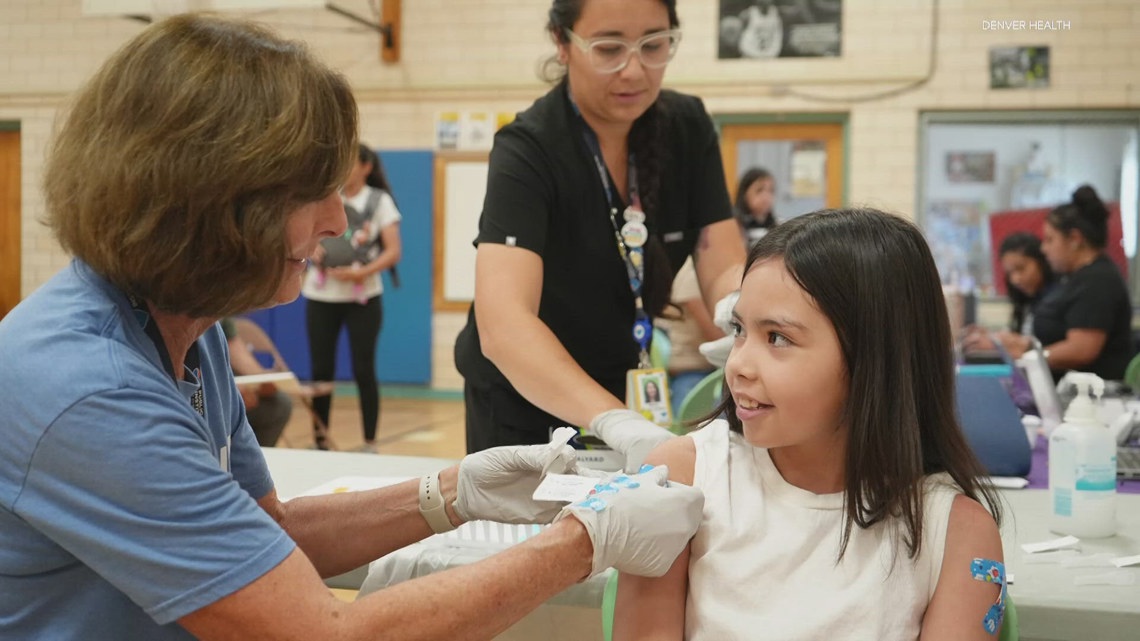
The CDC is cutting the number of vaccines recommended for every child. Doctors warn this will create confusion for parents and puts kids’ health at risk.
CASTLE ROCK, Colo. — The Centers for Disease Control and Prevention (CDC) is cutting the number of vaccines recommended for every child.
Health and Human Services Secretary Robert F. Kennedy Jr. said Monday the move protects children while respecting families.
However, health experts say the move puts kids’ health at risk.
Dr. Michael Milobsky, a pediatrician in Castle Rock, said the move is unprecedented but not a surprise.
“I think all pediatricians are concerned that this public health policy is changing for no clear reason and it’s going to leave more children vulnerable,” Dr. Milobsky said.
The CDC is still recommending 11 vaccines, which includes measles, mumps and polio. Seven other vaccines will be relegated and recommended only for high-risk groups or left up to families and doctors.
“I think we’re going to see rises in things, diseases we haven’t seen in a long time,” Milobsky said. “Meningitis B on college campuses is going to be something that is going to come back. It used to be a regular occurrence until this vaccine went into regular use. We’re going to see it come back.
“The changes that I’m most concerned about, based on what I see, is the changes in the recommending the RSV vaccine. And that has been a massive gamechanger in preventing severe RSV disease in vulnerable young children and decreasing hospitalizations and ER visits. And to change the recommendation on that I think is dangerous for something that has been proven safe and effective.”
Despite the change from the CDC, Dr. Bob Belknap says nothing will change at Denver Health.
“We will continue to recommend all of the same vaccines as we have been. We believe strongly that they are supported by the best scientific evidence and protect children against really potentially severe or even fatal illnesses,” said Belknap, chair of the Public Health Institute with Denver Health.
Denver Health, along with Children’s Hospital Colorado and the Colorado Department of Public Health and Environment, say they’ll follow the American Academy of Pediatrics vaccine recommendations instead.
Both Milobsky and Belknap worry the CDC’s change will be disorienting for parents.
“We are concerned it will create more confusion,” Belknap said. “We encourage people to talk to their health care providers and ask them any questions that they have.”
“RSV – parents are going to pass on a proven, effective and safe treatment that protects their babies because they think it’s optional or really not in their best interest because of this recommendation,” Milobsky said. “We’re going to see babies unnecessarily end up back in the hospital, in the ICU, and perhaps with life-threatening RSV because parents choose to pass on this.”
With more and more families coming in questioning or even rejecting these shots and the science behind them, Milobsky said the CDC is putting him and other pediatricians in the tough spot of defending lifesaving vaccinations.
“It’s making it a lot more difficult than it should be,” Milobsky said. “This is putting us at odds with now established public policy, which makes it really hard to have these conversations. Because who are you going to believe? You going to believe me? You going to believe the government? It’s making everything more complicated.”
9NEWS reached out to Children’s Hospital Colorado about the change. They sent back this statement:
“Children’s Hospital Colorado believes vaccination is one of the most effective ways to keep children healthy and to protect them from serious diseases. Children’s Hospital Colorado has historically followed the American Academy of Pediatrics (AAP)’s schedule for childhood immunization and there are no changes to our current recommendations. We encourage families to have conversations about vaccines with their trusted primary care provider(s) and to reference factual sources such as our Truth About Vaccines article, the AAP and Immunize Colorado.”
9NEWS reached out to CDPHE about the change by the CDC. They sent back this statement:
“The Colorado Department of Public Health and Environment is aware of the announcement today by the U.S. Department of Health and Human Services regarding significant changes to the recommended childhood immunization schedule. Notably, federal officials have indicated these changes will not impact insurance coverage or vaccine availability through the federal Vaccines for Children (VFC) program.
“Regardless of developments at the federal level, our vaccine recommendations and disease prevention strategies are grounded in data, transparency, and expert guidance to ensure Coloradans continue to have access to safe and effective prevention tools.
“We remain dedicated to relying on the best available scientific evidence supporting the use of vaccines in protecting our children, families, and communities. We recommend all Colorado families and health care providers follow the 2025 American Academy of Pediatrics (AAP) Recommended Child and Adolescent Immunization schedule. The American Academy of Pediatrics’ schedule is developed by infectious disease experts and has the latest, trusted guidance on when children and teens should receive vaccines. The organization has been publishing and issuing evidence-based vaccine recommendations for nearly 90 years. Pediatricians know how important vaccines are in keeping children, families, and communities healthy and thriving.
“CDPHE reaffirms its commitment to protecting the health of Colorado’s children by following scientific evidence and public health best practices:
-
Following the passage of House Bill 25-1027, Concerning Modifications to Statutes Governing Disease Control, the Colorado Board of Health revised 6 Colorado Code of Regulations (CCR) 1009-2 on Dec. 17, 2025, to incorporate the 2025 American Academy of Pediatrics Recommended Child and Adolescent Immunization Schedule by reference into the state’s school and child care immunization requirements. This schedule remains the gold standard for pediatric care in the U.S. and is supported by decades of peer-reviewed clinical data and safety monitoring.
-
The Colorado Division of Insurance also took proactive steps during the 2025 legislative session to ensure federal shifts do not create financial barriers for families. Under Senate Bill 25-196, Insurance Coverage Preventive Health-Care Services, signed into law in May 2025, the Colorado Commissioner of Insurance has the authority to require state-regulated insurance plans to continue to cover all preventive vaccines recommended as of January 2025.
-
Colorado’s immunization requirements for school and child care entry have not changed. We encourage parents and guardians to continue following the advice of their pediatricians and the AAP-backed schedule to ensure their children are protected against preventable diseases.”
On Tuesday, Intermountain Health sent this statement to 9NEWS:
“We understand some individuals have questions about certain vaccines. These questions, and related preventive care plans, are best discussed between a patient and her or his healthcare provider. We will continue providing FDA-approved vaccinations to patients who want them in accordance with evidence-based guidelines and guidance from medical societies.”
link