
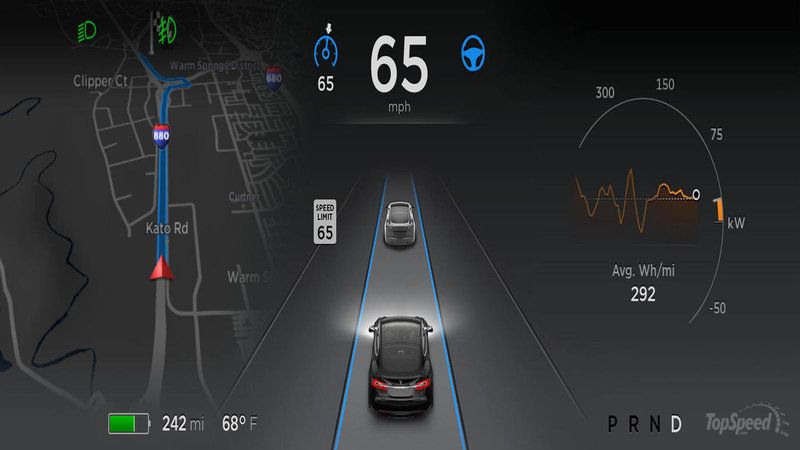
In 2021, the US National Highway Traffic Safety Administration (NHTSA) opened an investigation into Tesla following 11 crashes with first responder vehicles. Now, a larger study has found that vehicles with advanced driver assistance systems (ADAS) like adaptive cruise control and hands-free driving software like Tesla’s Autopilot, GM’s SuperCruise, and Ford’s BlueCruise, can be flummoxed by the strobing lights found on emergency vehicles.

Related
The Flashing Lights Cause “Digital Epileptic Seizures”

The study, performed by researchers at Ben-Gurion University of the Negev and Japanese technology firm Fujitsu Limited, shows that camera-based ADAS systems struggle to identify objects on the road when exposed to flashing lights, like those found on emergency vehicles. The researchers call this a sort of “digital epileptic seizure,” or “epilepticar” for short. The systems become especially overwhelmed in low-light conditions, as this effectively amplifies the effect of strobing lights.
The research team calls the flaw a “significant risk” that could cause vehicles to crash into oncoming objects. In fact, that’s exactly what inspired the study. The NHTSA’s 2021 investigation began when Teslas using Autopilot hit 16 emergency vehicles starting in 2018 through the investigation’s start in 2021. The investigations did lead to a recall of Tesla’s system, which uses exclusively cameras.
Other systems (like BlueCruise) use LiDAR sensors for redundancy, helping to aid in object identification when visual identification by the car’s artificial intelligence-trained cameras when conditions aren’t optimal. It’s an important redundancy and one that may have prevented the 16+ crashes Tesla vehicles were responsible for.
BGU And Fujitsu’s Study Found A Fix

In addition to the use of secondary sensors for redundancy, the study found a possible fix. While the flashing lights may create a strobe effect that hinders a system’s ability to detect objects’ size and distance, the researchers have a software fix that involves training a car’s systems specifically on vehicles with flashing lights. In essence, the fix solves for the “epilepticar” seizures ADAS systems can experience through targeted exposure, much like one might fix an injury with physical therapy and targeted exercise.
TopSpeed’s Take

The solution sounds like a simple one, and one that shows a notable decrease in accidents, according to the study. Automakers that choose to offer some degree of driver assistance software need repeated testing and validation to uncover blind spots, and Tesla’s failure to catch the lighting issue pokes holes in the automaker’s use of owners and their cars as testing beds for the latest versions of its self-driving software. More broadly, automakers need to continue to stress-test these systems in varied conditions to continue to expose weak points like this.
link